30 September 2013

Celebrating our four-year-old

I was surprised how interested you were in my post about our one-year-old's birthday so have decided maybe it is relevant to share a bit about how we celebrated Eva turning four this month.


This was a much anticipated birthday for our girl - but not because she wanted presents or even a party. No, the most important thing was that she moved up the pre-schooler hierarchy from 'Three And A Half' to 'Four'. It has been made clear to me by the one who knows best that such a transition is a very important matter. 


Rather than a 'party', with all the associated expectations and activities, we invited Eva's three best friends to join us for half a day playing at Landsdale Farm. Eva had been there not so long ago and wanted to share this favourite place with her friends. We are fortunate that we avoided socially awkward choices about excluding others, as none of these closest friends are from the big kindy friendship group. 


We talked it up as 'a play to celebrate Eva's birthday' rather than a 'birthday party' and insisted gifts were unnecessary, but all three guests still brought gifts. 
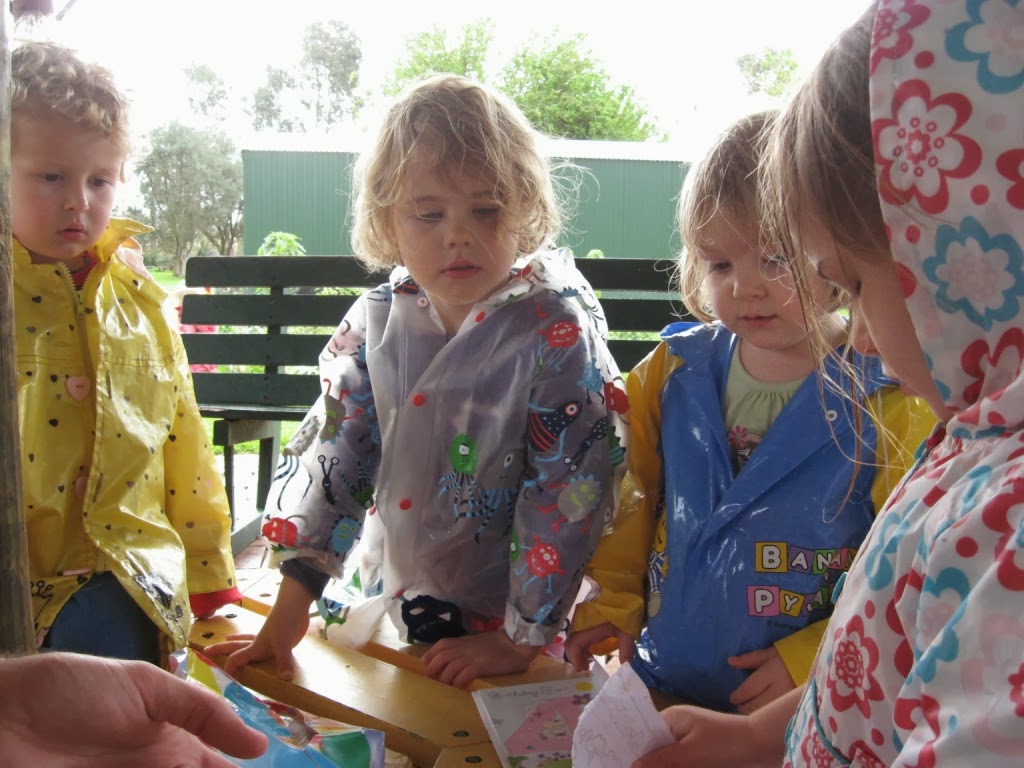

However, these friends know us well and no-one went silly with gifts. At least two of the three guests had been allowed to (and wanted to) choose their gifts themselves, which resulted in gifts that were exactly what a four-year-old wanted - as chosen by a four-year-old and a three-and-a-half-year-old - even if not quite exactly what their parents had in mind. I loved that the kids were encouraged to be involved in choosing.


Gifts are tricky. There was not one gift Eva was given, from friends or family, that was not very appreciated, thoughtfully chosen and lovingly given; not one that I would want to return or am not thankful for. And yet the net outcome is that a whole lot more stuff has come to dwell at our place. For next time I am considering ways to do a 'give away' in preparation for any time of receiving. Still working on that.


Rather than 'party food' we took what we would ordinarily take for a picnic outing, and ate it out of the packets or off our laps rather than from fancy single-use disposable 'party wear'.


All the children had a blast, even (especially?!) in the rain. 


You would have been forgiven for thinking the main event was not the farm, though, but the half-hour drive in our car with all the children in the back. 


Yes, this is why we bought a seven-seater. We could nearly have driven them the length of the freeway and back and considered the birthday well celebrated without even getting out of the vehicle!


On her actual birthday we had hidden the gifts we bought for her around our room, wrapped in pretty fabric as described at Christmas. Eva loved hunting them out - hide and seek is one of her most favourite games at present.


Our six gifts were: two picture books, a set of wooden alphabet magnets, a train tunnel (her particular request), heart-shaped post-it notes, and a small plastic car & horse trailer & horse. I think I bought too many gifts (although a $4 train tunnel and a $2 pad of post-it notes, though received and used with much glee, are not exactly exorbitant). I am not a great success at living smaller, just one person having a go, and the lovely things on offer for children easily get me in. This time around I didn't check how sustainably the timber for the toys was produced, and the horse trailer etc I confess was a complete impulse buy of unnecessary plastic on a day Eva had enjoyed driving behind a horse in traffic. However, it was at least bought from our lovely local independent toy store rather than some bulk-rubbish warehouse store.


Breakfast was her choice: dippy eggs on this occasion, although she has many breakfast favourites and Tyson could have been up for a trickier cook than that!


We gathered with Tyson's family for an afternoon tea picnic at Eva's favourite local play area, Tomato Lake, which involved much bolting around with cousins and eating food brought by all to share. Cake by Grandma again - she's very good at that. Eva had asked for a red snail cake.


Of course if you're going to dress in a frilly pink outfit, you need to do a bit of gardening too...
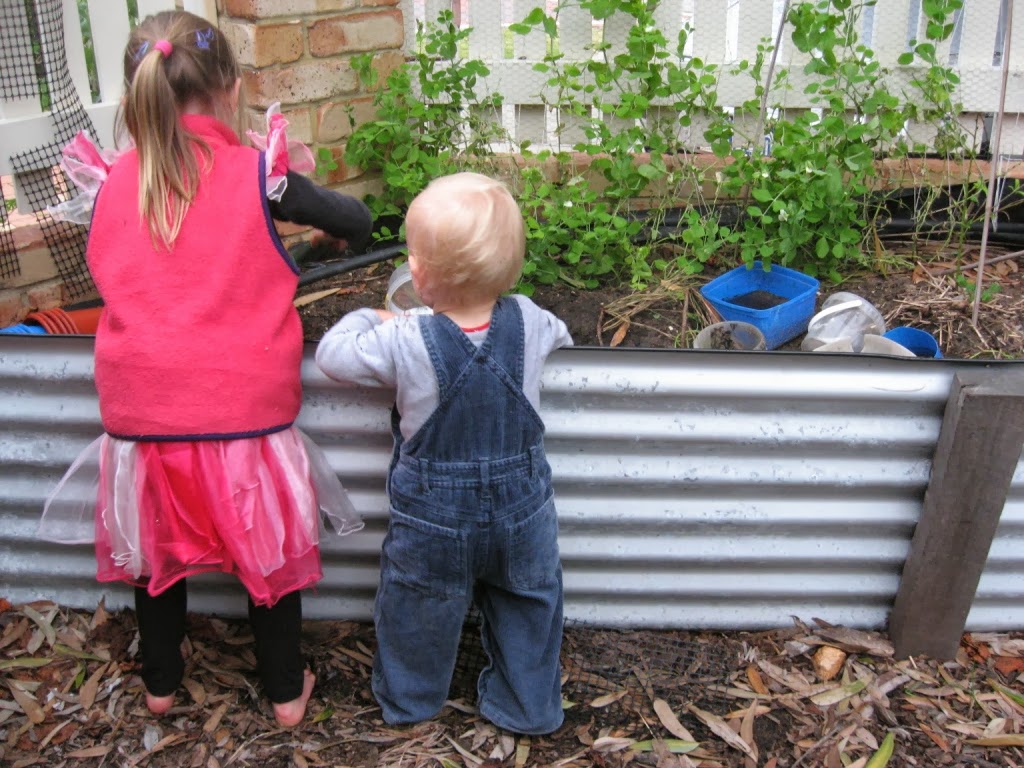

The next day we went to the zoo with her my-side cousin. We often go to the zoo, as we have season passes, so that wasn't a particular treat in itself, but we only go on the carousel for special occasions. Because it was Eva's birthday we let the girls have two rides. That's very near to paradise.


Her kindy, church and Wiggly Woo all sang happy birthday and gave her a small something (sticker, chocolate, pencil). Her Children's Church leader cut watermelon into a cake shape, stuck in candles, and made it a birthday morning tea - especially thoughtful, as Eva doesn't really eat cake. We bought a bag of chocolate frogs and gave them out at kindy. Tyson made sure his rostered day for parent help at kindy was in the birthday week. One evening in the week after her birthday we went out to dinner as a family at a local restaurant we often frequent, where Eva likes to order and devour an enormous chicken parmigiana, and made note to her that it was another part of remembering her birthday. 


And perhaps most importantly I tried very hard to make her birthday and days around it days of 'yes'. So often when at home with two small children I find myself saying 'no' all day. Now and then I set myself a day of 'yes' - where unless it is dangerous, expensive or impossible I do my level best to say 'yes' to what Eva suggests, even if it is not the most convenient choice or not the one that I personally would enjoy most. I never tell her it is a 'yes' day, I just do it, and usually the result is a happy day all around. Why don't I do it every day? (Because I am too often tired and grumpy and sometimes things do need to get done... before next Christmas...)

Happy birthday to our precious girl. We love you lots and can't believe you are four already.


The usual 'time/ cost/ impact' section that would go here doesn't make a lot of sense for this one. The impact is as per what I wrote about birthdays in July but it is intangible and impossible to quantify. The whole birthday cost us about $100 I think, including $6 farm entries for four kids and $4.50 bag of chocolates for kindy kids, but I didn't keep track closely so that may not be entirely accurate. Dinner at the restaurant is not in that amount - can't remember how much that was.

Thanks parents for allowing me to include photos of your lovely children on my blog.

18 August 2013

Australian native jam

Do you know Lilly Pillys? Those bright pinky-purple berries that grow in many Perth yards, in hedges and public gardens, and on rambly old overgrown properties? I love the way they look and I like their name - its sounds quirky-romantic to me. 


As of last month, I now also love that they are edible, that they are an Australian native, and that they grow in our neighbour's yard between our two driveways.


So we were making jam again.


Eva was so excited by the idea that we could harvest these beautiful berries and make something edible that she was the main motivation for the project.


It was Greg's idea, though, and he put me onto this recipe, which we followed. I checked the internet to be sure I had lilly pillys and found there are over 60 different species of lilly pilly and all of them are edible.


The recipe calls for one lemon and 1kg of sugar per 1L of lilly pilly pulp. We doubled the amount of lemon, and wouldn't have wanted any less.


Next time I think I would go for a 3:4 ratio of sugar to pulp, as the 1:1 ratio has given us jam that is sweeter than it needs to be.

pulp coming through the sieve - it really is that colour

BUT: it is surprisingly delicious, and very beautiful. 


no it didn't boil down that far - I tipped it into a bigger pan so I could supervise it less closely
Six jars of lovely jam - 2L of pulp, about 2.5L of jam once sugar and lemon juice was added.


As I put too much water in when boiling the lilly pillys, I was left with a couple of litres of bright pink liquid once they were all scooped out. 


This I put in the fridge and used as a herbal tea. With half a teaspoon of honey per large mug, heated in the microwave, it was fantastic!


I am so excited that I cooked an Australian plant! OK, I don't think its native to the southwest of WA where I actually live, but at least its not from the northern hemisphere...

This is now our third jam-making session in less than a year (see posts on strawberries and nectarines). We are a big jam-eating house, but even so we are more than keeping up a supply for all our needs and gifts for friends. I am therefore now prepared to commit to NO MORE BUYING COMMERCIAL JAM.
 
Initial Time: About 3.5 hours - although the stove-top sections didn't require constant supervision, so actual labour time was closer to 2.5 hours (1/2 hour harvesting; 1/2 hour washing and preparing; 1/2 hour boiling; 1hr smooshing through a sieve to get seeds out and thin the pulp - this is the really labourious bit; 1/2 hour cooking; 1/2 hour bottling and cleaning up)

Initial Cost: About $2 for a bag of sugar. We remembered this time to get lemons from Grandma, and (with our neighbour's permission) the lilly pillys were free. She found the jar we gave her too sweet for her taste but her grandkids loved it.

Ongoing time or cost commitment: Half a day every three or four months to make whatever the latest seasonal jam will be.

Impact:

Australian household spend on average about $1 per week on jam, with each Australian eating around 2kg of jam per year. We are a net exporter of 'jams, spreads, pastes, etc' - around $12mill worth per year, a small portion of the approximately $625mill annual export of substantially processed fruit and vegetable from Australia, and a blip beside the approximately $1.6bill of processed fruit and vegetables imported. Food and vegetable processing in general employs around 75,000 people in this country. (more stats here - from 2011-12). So not buying jam is not about reducing reliance on food imported from overseas. Very little if any of the jam available in supermarkets is produced in Western Australia, however, so we are reducing our food miles for produce trucked across Australia (I really hope it is trucked. Surely we don't need to fly our jam around? Actually I would love to think it was brought by rail... there is always hope, surely?)

Commercial manufacture of food products involves all manner of inputs and dependencies, such as: transport fuel, transport network, communications, banking services, electricity, gas, water (HEAPS of water is used in commercial processes!), chemicals for cleaning, preservatives to extend product life, packaging materials (including their production and transport)...

Think about it for a jar of jam:

Lid - sourcing raw materials (mining), processing them into a workable form, shaping the metal into a lid, adding labels (inks, dyes, etc and sometimes paper), at each of these stages transporting the stuff to the place where the next stage happens, at each stage a business operation with a footprint of all it takes to run an office (at bare minimum) and possibly a factory or a mine site. Quite likely a mine site that flies workers in and out every day or so.

Jar - sourcing raw materials (mining), turning them into glass (I'm no expert but that needs HEAT!!), shaping into jars. And at each stage another round of transport and business footprints.

Label - sourcing raw materials (forestry), turning them into paper, graphic design work, adding dyes etc to print and finish, glue to attach to jars. Add transport. Add business bits and pieces like the office coffee machine, toilet-flushing for all those staff, and replacing the carpets every few years...

Jam - sourcing raw materials (fruit, but also sugar, preservatives, corn syrup - although to be fair the Cottees and IXL jars I have left over in my pantry from before the jam-making began both have very few ingredients beyond fruit, water, citric acid and pectin), all the inputs required for horticulture including many pesticides, and lots and lots of water; all that is required to fit-out a factory for production.

And each piece has more sub-pieces that have their own chain of impact - Where did the glue come from? Where does the dye come from? What chemicals are used to clean all the equipment needed along the way? What materials are the machines in the factories made from?

By comparison our lilly pilly jam used:  recycled glass jars; about 30L of water to wash berries and jars, gas to run the stove; electricity to run the oven to sterilise the jars; no electricity for light or heating or cooling as we worked during the day on a nice winter's day; petrol to transport lemons from Grandma to us (but we didn't make a special trip); and all the supply-chain stuff above for commercially produced sugar - especially HEAPS of water that it takes to grow sugarcane. Our equipment (stove, our kitchen, the stainless steel saucepans, mixing bowls and spoons, plastic lemon squeezer) all comes from somewhere and has its own footprint.

Impact on my lifestyle: The only thing I may miss is ginger marmalade, unless I can find an acceptable recipe to try, and a cheap-enough source of ginger.

PS: North American friends, we Australians use 'jam' for what you call 'jelly'. 'Jelly' here is what you call 'jello'. Not so great on toast.

26 July 2013

Happy Birthday

Last week our 'baby' turned one!


This post is only very loosely in keeping with the theme of the blog, and largely a gratuitous display of photos of my lovely children, especially our delightful one-year-old.

The loose link is: how to celebrate a one-year-old's birthday without stomping great planetary footprints...


A quick scan of the internet suggests 'celebrate' equals 'party' for most people. I only looked at one or two websites guiding the planning of first birthdays to realise we are way out of touch with mainstream culture here.  The average task-list to prepare for a first birthday includes: choosing a theme and colour scheme (that would be what the site selling special-print napkins, paper plates and disposable cups is aiming at, I guess); choosing a guest list; picking a venue; planning a menu; deciding on decorations; preparing games for the bigger kids; Birthday Cake (capital letters please); invitations; scheduling activities; selecting gifts; putting together party bags.

My task-list went something like: What does our boy enjoy? Who will want to celebrate him? How do they enjoy showing that they love him? What does he need (nothing!)? What would be a useful, playful, creative, open-ended addition to our toy collection that he might play with many times in many ways?


It seemed most important to ensure Eva was able to feel his birthday was appropriately marked, and for her to see in how we celebrated him the way we value each member of our family. It was also important to let her give him something that she was involved in choosing.

She chose him a bath duck.


She also decorated him a cardboard box.


She made him at least three birthday cards... there could be more yet - just because his birthday is over is no reason to stop making him cards...

And she helped me make and decorate two birthday cakes.

I think they were perfect. I know full well they would win no prizes in the highly competitive game of children's birthday cake one-up[wo]manship that is rife amongst families of small children and across the internet, but they perfectly express Eva's careful attention to making something wonderful for her brother.


We had cake at home, cake with friends who regularly come to dinner, cake at church, and cake with Tyson's family (that one made by Grandma, demonstrating both loving careful attention AND some cake-decorating prowess). 


We had play-dates with his my-side aunties. We had afternoon tea with Tyson's family. A lovely collection of modest, thoughtfully chosen, minimally packaged gifts made their way home with us.

And we spent our son's birthday doing things he enjoys:


Eating letter-pancakes made by his dad;


Mouse-rides with Eva (zoooooom!);


Playing with his sister;


Digging in the potplants and eating dirt;


Showering with mum without watching the clock;


Climbing up things...

...like the shelves under the kitchen bench... 


to swipe a cherry off the birthday cake;


Swinging at the playground


And of course, his favourite gift of all, which he has carted around the house until it is in shreds, was the piece of wrapping paper sent across the country by my parents. Gran had to pad it out with a book inside so it didn't get ruined in the mail, but he saw through that immediately and knew the paper was the main event.


Initial Time: Decorating cardboard box: three half-hour(ish) sessions, one for white undercoat, one for colour, one for stickers; an hour making and decorating cakes; half-hour making a batch of afternoon tea muffins

Initial Cost: About $20 - two cakes, one basket of home-made muffins, a rubber duck

Just to be clear, I am not opposed to spending money to celebrate. But I am trying not to spend money just to 'do it right'. If I had found something expensive that would have been a great addition to our household (useful, playful, creative, open-ended, multi-use) I would have quite possibly bought it. The cardboard box was not being cheap-skate - I genuinely think our one-year-old will get more playful, creative use out of that box than any shop-bought item I considered. And it was a craft-activity for his sister, and allowed her to be really engaged with giving something special to her brother.


Ongoing time or cost commitment: Same again come September...  how to celebrate a four-year-old's birthday...

Impact: I said it better at Christmas (two posts) but its about shaping the way we and our children view celebration. How do we love each other well? Does it need stuff? 

Hopefully our choices also put a few less disposable napkins/ plates/ cups/ cutlery into landfill, along with less plastic packaging and fewer broken plastic toys. Here's an old but good post from Little Eco Footprints on where our plastic toys end up.


Oh, and that bruise in all the photos? That's because he learnt to walk the week before his birthday and walking is a hazardous game...


15 July 2013

Clothing Swap - and a one-year commitment

We have done lots of things to reduce our global footprint since we began this 'one more thing per month' commitment back in May 2009. A skim over the blog archive shows we have made attempts to live more sustainably on many fronts, but I have been aware for some time there is a gaping omission in my commitments: clothing.


In June, one of the women at our church arranged an after-worship clothing swap. She was a bit overwhelmed by the volume of discarded clothing that arrived for redistribution. 

I took four bags of clothes, and came home with one bag for me and another one for a dress-up box for Eva (collected from the unwanted items being packed up at the end).


The clothing swap ran over two weeks, so we could take things home to try and return them the following week if they didn't suit. A visiting group of young people the second week helped quite a lot of the items find a new home - they could not believe their luck to be told all the clothes were free!


So, I have slightly reduced my wardrobe's load. The next step, and the one I have been actively avoiding for a while, is to commit to not refilling it with unethical garments. As this blog is called 'Small Steps' I have finally decided it is OK to commit to a small step only at this stage: for the 2013-14 financial year, I will not purchase any items of clothing for myself that are not ethically sourced and/or second-hand.

Its a small step only because I have not included clothing purchases for the children, and I have not committed to more than twelve months. 

A great deal of the clothes my children wear are hand-me-downs (to those who have passed clothes on to me for the kids - thank you! - you know who you are. Especially you who keep on handing on the next sizes after we grow past the welcome truckload of baby clothes) but just last week I bought Eva a whole pile of leggings - 'soft pants' - as she won't wear anything else at present and suddenly grew out the top and through the bottom of nearly all her existing such garments. They were $7 each and I knew as I purchased them that it could not be possible for everyone in the supply chain to have been paid and cared for appropriately for their work in making them. Eva will fit into them for a year if I am lucky. I am still struggling to commit to paying what I should be for clothes that will need replacing next year.

My first thought is that I may well simply buy nothing for myself this year. I have enough clothes. I tend to buy clothes on a whim, not go searching for a specific item. Figures from 2007 showed Australians spent $10.4 billion on clothes in that year and estimated that by 2013 we would be spending close to $12.8 billion. An average Australian woman purchases 56 clothing items per year (men buy less - around 29). Aside from proving that I am not an average Australian woman, as I find this figure outrageous and can't imagine what I would do with more than one new item of clothes per week, these statistics illustrate that we are consuming clothing at an unsustainable rate.

The most obvious issue of concern in the clothing industry is the poor conditions and low pay of clothing manufacturing workers. The horror of over 1000 clothing workers dying in Bangladesh in April because their building collapsed on them has brought the issue of third-world factory conditions to western media attention, if briefly. It is perhaps less well known that between 50 and 70% of Australian-made clothing is produced by piece-workers, often migrant women with few choices, who work to ridiculous deadlines, generally in cramped conditions, and end up earning on average $5-$8 per hour. In Australia. And many earn less - $3 an hour is well-documented - while having no superannuation, holidays or workers' compensation, and often being required to provide and maintain their own machines and tools.

Besides the immediate human impact, there are also significant environmental issues involved in the production of clothes. All that fabric comes from somewhere - cotton fields heavily sprayed with pesticides are a big supplier; non-renewable petrochemical-based materials such as nylon, vinyl, spandex, acrylic and polyester account for a significant portion of my wardrobe. All manner of chemicals are used to turn those raw materials into clothes that are coloured, shaped, pressed, washed, displayed and packaged for our purchase. Like most things we consume, clothes have often travelled a long way to reach us - and not by solar vehicles. Much clothing ends up in landfill - sadly, large amounts get there without ever being worn, but even well-worn garments are generally destined to get to the tip in the end, and if they are not natural fibres, they will have a long and stinky life there.

Buying second-hand is better than buying unethical clothes brand new, but I am also slightly uneasy about it. I have had patches in my life when I could only afford clothes if purchased from an op shop - including when I needed to outfit myself for my first professional job. It frustrated me enormously that the best items were often picked out by bargain hunters who could have afforded to buy new clothes but liked op shops.  I promised myself then that when I had a real income I would leave op shop goodies for those who had no other options. Another friend follows a policy of always paying double the shelf price when buying from an op shop. I don't entirely avoid second-hand stores, but it will be a challenge in the coming year to buy ethical, not just to avoid buying new at all.


Initial Time: Clothing swap: half an hour going through my clothes. I would have liked to take longer but it was not to be. Perhaps I was more ruthless because I was in a hurry. The clothing swap itself was a lovely friendly chat with friends while having a cuppa and wandering among rows of clothes - I don't consider it time 'spent'.
Twelve-month commitment: much thinking; no actual set-aside time. 

Initial Cost: Zero

Ongoing time or cost commitment: I am guessing individual garments will cost more, but cutting out impulse buying will mean the overall cost is about even. Similarly, time spent hunting for ethical brands will be an addition, but no longer meandering into any old clothing store that says 'sale' should be a time-saver.

Impact: Clothing swap: many of us reduced our wardrobes while adding a few items at no cost to us, to workers or to the environment; fifteen bags of clothing were gathered up at the end and passed on to charity shops. Not bad for a church gathering that has about 40 adults present on any given week.
Twelve-month commitment: I can't quantify it but I hope it will be two-fold: (1) ceasing to provide funds to clothing companies with unethical practices (2) actively financially supporting producers and retailers who are doing the right thing. I suspect it may also have the impact of changing my heart towards clothing. Just a couple of hours tonight researching this issue to write this blog have me already more concerned and willing to act differently than I have been in a long while.

I will try to let you know how this works out for me over the coming year.

Links

Slightly old but useful SMH article on Australian fashion cycles, consumer trends and their environmental and social impacts. Scroll to the almost-bottom for the 'life-cycle of fast fashion'. 

Ethical Clothing Australia (ECA) - formerly 'No Sweat' - the Australian accreditation scheme for ethical clothing

About Ethical Clothing Australia

Shop Ethical's info on Ethical Clothing Australia and on outworkers (homeworkers) in Australia

Shop Ethical's list of (as of today 120) clothing brands with ethical credentials - fair trade, organic, Australian made, alternative fibres, second hand etc, vegan (?!) and ECA-accredited. Listed in table-form showing which of these the brand gets a tick for, with links to the websites of each brand.

Fair Wear Australia - 'aims to end the exploitation of workers in the garment industry, in Australia and overseas'

Textile Clothing and Footwear Workers Union of Australia - includes information on various issues, and campaigns to participate in (eg. recent work to raise money for victims and families effected by the Bangladesh factory collapse)

Labour Behind the Label - 'supporting garment workers worldwide' - lots of campaigns to be involved in, with a resource section of research and information

Indigo Bazaar - funky-looking online fairtrade clothing shop. I haven't shopped there... yet

Check the comments section for more links or to add your own.